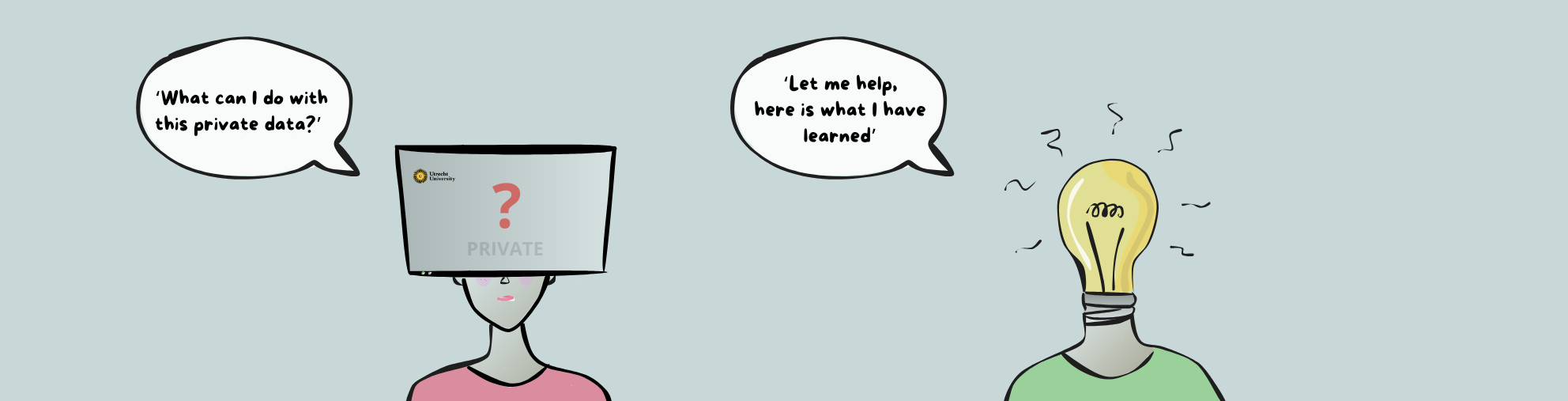
We interviewed researchers from the Geosciences faculty to ask them about unforeseen pitfalls students approaching research should be mindful of. Here are some insights:
Know where your data is!
A lot of researchers pinpointed data backup and storage as a major issue. It might be that you forget to back up the data to the cloud, or sometimes the cloud itself malfunctions. The best practice is to continuously check, backup, and make copies of important work. Be mindful of how often and where your data is backed up.
Another aspect that can be overlooked at times is keeping track of your work. Consider keeping a fieldwork journal! While you might feel as though you’ll never forget exactly what resource you used to calculate a certain variable, or the origin of all your data sources, memory can be a fickle thing. If something does go wrong, or if you get the chance to recreate your research later on, a step-by-step guide of exactly how you got there is a great resource to have in your back pocket. Such journals are also great as a help to document your data for people who want to reuse your data for their research.
AI and academia
AI and copyright
It should go without saying that personal or sensitive data should not be uploaded to AI Models such as ChatGPT. We strongly discourage you even from sharing a detailed version of your research plan or methodology.
Other things to keep in mind:
When using AI-generated content, be aware that you have to take accountability and responsibility for the content itself and its integrity.
Authors should acknowledge the use of AI, language models, machine learning, or similar technologies in their research. Include a brief description of the content created or edited and specify the tool or model used, including its version and manufacturer in your research methods section.
Always implement quality check/control to ensure that the generated outputs are of sufficient quality for your intended use.
Be aware of potential biases in your generated content, such as gender, religious, racial biases and take proper actions/measures to mitigate them.
Ensure that your use of generative AI complies with local, national, and international laws and regulations, including copyright and intellectual property laws.
At the same time, AI can be a helpful tool for aspects of your research. Here are some guidelines on creating useful queries to make the best of generative AI tools:
When data are in the public domain, you might not need to ask and you just download. But when you ask and you have to buy data, or someone owns the data, or if you collect the data, then are you the owner of the data? … Who holds the copyright?
Always good to remember, self-plagiarism is indeed possible and considered an offense. Find out more about copyright, citing sources and copyright-free sources:
“I’m always trying to think what might go wrong and how can I avoid that? And what if multiple things so wrong at the same time? How can I avoid that?”
James Patterson
Working with human participants
If you’re working with human participants, remember that they are doing you a service and you depend on their willingness to participate. So always be kind and understanding when working with human participants. Finally, make sure to inform them of the results of your study. Ask them if they want to receive your report or a layman summary, and send it when you have completed it.
We hope these tips give you an idea of common pitfalls to watch out for. For feedback or questions, you can reach out to datateam.geo@uu.nl.